

Resource Adjustment as an Effective Strategy for Sustainable Achievement in the WASH Sector
WASH
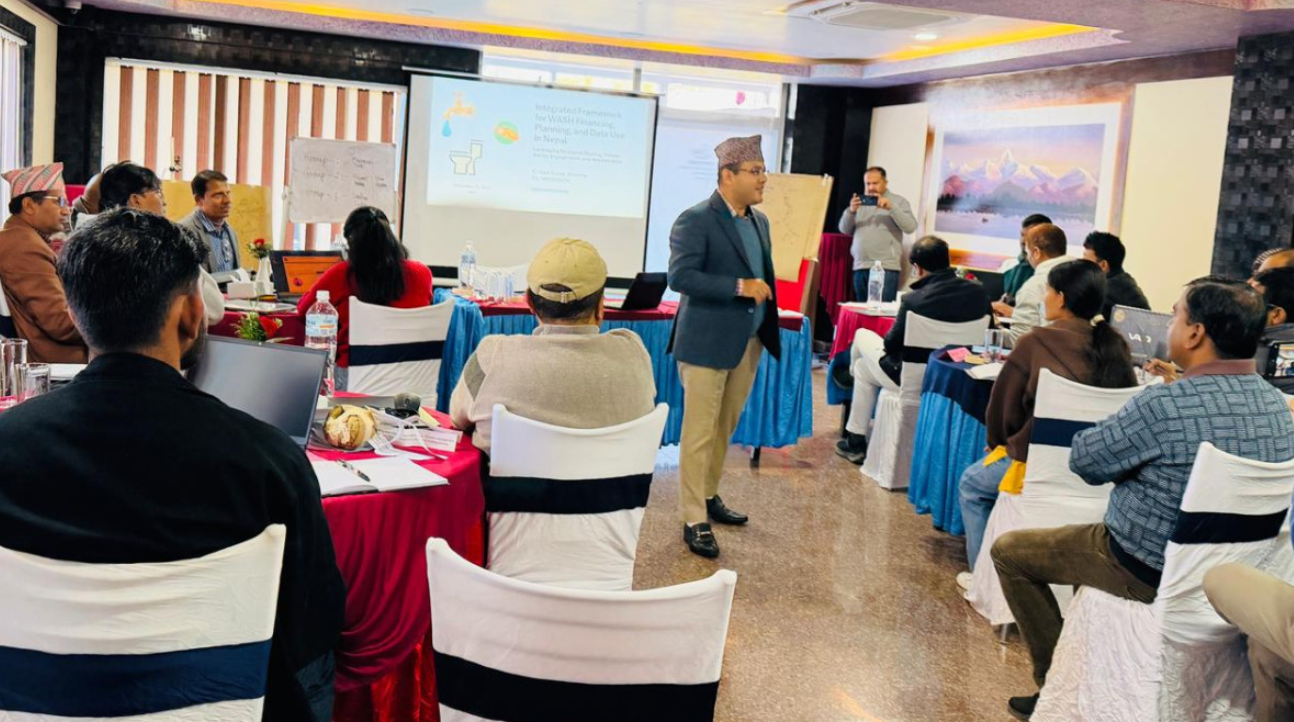
Kathmandu. The practice of resource mobilization has been pursued as an effective strategy in Nepal with the objective of achieving sustainable achievements in the drinking water, sanitation and hygiene sector.
This approach of achieving common goals through resource sharing among various stakeholders is expected to reduce duplicate investment, increase coordination and make more impact from limited resources.
Resource adjustment means the integrated use of financial, humanitarian, technical, infrastructure and knowledge-information resources provided by the federal, provincial and local governments, development partners, non-governmental organizations and the private sector. This exercise is expected to help reduce the problem of duplication, fragmentation and unbalanced investment in the WASH sector.
According to Engineer Ram Kumar Shrestha, executive director of the National Water Supply and Sanitation Research, Innovation and Capacity Building Centre, Nagarkot, the practice of resource adjustment in the habitat sector is being carried out in Nepal through joint investment and collaboration with development partners among the federal, provincial and local governments.
The practice of co-investment in drinking water and sanitation projects is increasing especially through sector-wide and program-based budgeting system, he added.
"This type of financial adjustment ensures a large and predictable budget, and allows programs to align well with national habitat priorities," he said. This has helped in the implementation of large projects with long-term impact by reducing the tendency to be limited to small, isolated projects. ”
Stating that resource adjustment in the WASH sector is not limited to the budget, Executive Director Shrestha said that technical human resources such as engineers, public health officers and social mobilizers can be used collectively.
According to him, the exchange of technical capacity and experience among various agencies would improve the quality of service delivery and strengthen the institutional capacity of the local level.
"Mechanisms such as the WASH Regional Working Group, the Technical Task Force and the Coordination Committee have been developed as effective tools for this purpose. Such mechanisms have been helping to reduce the distance between policy formulation, plan formulation and implementation levels," Shrestha said.
The basic principle of resource adjustment in the habitat area is to reduce duplication, increase coordination, and maximize returns from limited resources. Stakeholders stressed the need to make resource adjustment more institutionalized, transparent and accountable to ensure access to safe drinking water and sanitation under the Sustainable Development Goals (SDGs).
Executive Director Shrestha said that resource adjustment would play an important role in moving Nepal's habitat sector forward in a sustainable, inclusive and effective direction if clear role determination, transparent coordination and shared accountability were ensured.
He stressed the need to strengthen cooperation and trust between all levels of government, development partners and communities to achieve long-term results in the WAS sector.